
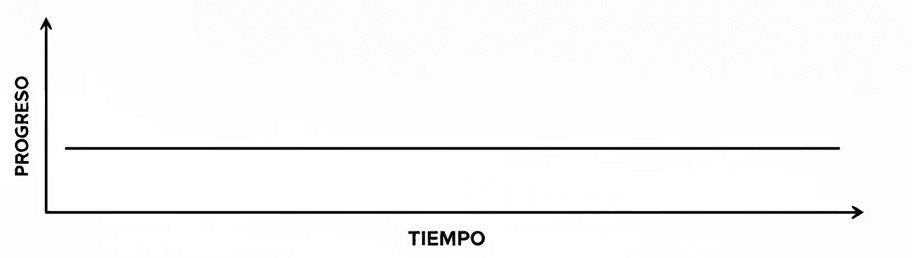
School is holding back the progress of our species
When we think about problems in education, we usually think they are simply a matter of poor grades. We worry about GPAs, whether students pass their exams, or whether they fail subjects. Parents stress over report cards, governments focus on international rankings, and, aside from spending time with friends and enjoying a bit of free time, students often go through their days without finding much meaning in what they are experiencing.
That is only the surface.
We often say that “school is just the way it is,” and that what happens during those twelve years is a necessary unpleasantness that everyone must endure. But beneath that illusion of normality lies a silent and almost imperceptible harm—one that affects not only individuals, but is also sabotaging our progress as a species.
The First Layer: From Grades to Personal Emptiness
When we stop looking at the numbers and start looking at each child, we encounter the first major crisis: individual flourishing.
Many parents become alarmed when their children finish school and emerge confused, apathetic, or without a clear sense of direction. Some even grow frustrated and say things like, “I’m exhausted with this kid—he doesn’t want to do anything.” They see it as a last-minute surprise or a character flaw.
But it is neither.
It is the logical consequence of spending twelve years in an experience that does not help you discover who you are or what drives you. A system that systematically erodes the ability to dream by failing to expand knowledge, destroys autonomy through guided passivity, and undermines confidence by neither providing real-world skills nor allowing people to learn from failure. By fragmenting knowledge and removing any form of real responsibility or skin in the game, the system disconnects you from reality and from yourself, stunting critical thinking and postponing the development of your identity in order to comply with someone else’s agenda.
There is a heuristic known as POSIWID: the purpose of a system is what it does, not what its designers say it is meant to do.
If the actual and widespread outcome of schooling is disorientation, the loss of curiosity, and existential anxiety, then that is its real purpose.
This is not a flaw in the system; it is its standard output.
And the person who pays the price is the individual—with their life.
The Second Layer: The Civilizational Cost
The cost of this system is not merely individual. When millions of people grow up this way—disconnected from their purpose and far from their potential—humanity as a whole moves forward more slowly.
That is the other side of the coin.
Progress is not an automatic process, nor is it a line that rises on its own. It is the result of flourishing minds and their ability to solve problems.
Ultimately, if the educational system functions as a standardization machine that suppresses human beings, empties individuals of substance, diminishes their capacity for judgment, and ignores their uniqueness, then it is acting as a bottleneck on human advancement.
I often say that the people who are pushing the frontier of what is possible today are anomalies. Individuals such as Elon Musk, Jensen Huang, Marcos Galperin, and many others flourished despite the system, not because of it. They are survivors of a structure designed to produce predictable citizens.
But the real impact lies in the enormous opportunity cost—in everything that could have been, but is not, because of this design.
How many cures for diseases have been delayed by decades because the person who might have discovered them came to believe that mathematics “wasn’t their thing”?
How many inventions, new forms of energy, or groundbreaking buildings do not exist today because a child concluded that science or art “wasn’t for them,” simply because no one ever showed them why it mattered?
How much wealth and human flourishing have we failed to create simply because we trained millions of people to obey and fit in, rather than to think boldly and create value?
The progress we see today is remarkable, but it is the product of a humanity running with the brakes on.
Today, we celebrate a handful of individuals who managed to survive the system. But imagine how quickly we would advance if genius were not the exception, but the natural outcome of our educational institutions.
That is why I often say that the educational problem is one of those urgent issues that must be solved as soon as possible.
Because what is at stake is not only individual well-being, but also the potential and pace of human progress itself.
Ulises D. Juárez

June 9, 2026